

The rise of cultured pet food
Growing meat in a lab is no longer science fiction. Cellular agriculture produces animal products directly from cells, and while the early focus was on human food, the technology is now moving into the pet aisle. This shift changes how we think about feeding cats without the ethical baggage of traditional slaughter.
Several factors are converging to drive this change. Environmental concerns are paramount; the traditional livestock industry has a significant impact on the planet. Supply chain disruptions, made painfully obvious in recent years, have highlighted the fragility of relying on conventional animal agriculture. And a growing number of pet owners are seeking more ethical and sustainable options for their furry companions.
The first steps in cellular agriculture date back to the early 2000s, with research focusing on growing muscle tissue in vitro. While early attempts were incredibly expensive, advancements in biotechnology have dramatically reduced costs and increased scalability. It's not about replacing traditional farming overnight, but rather creating a complementary system that addresses the limitations of current methods.
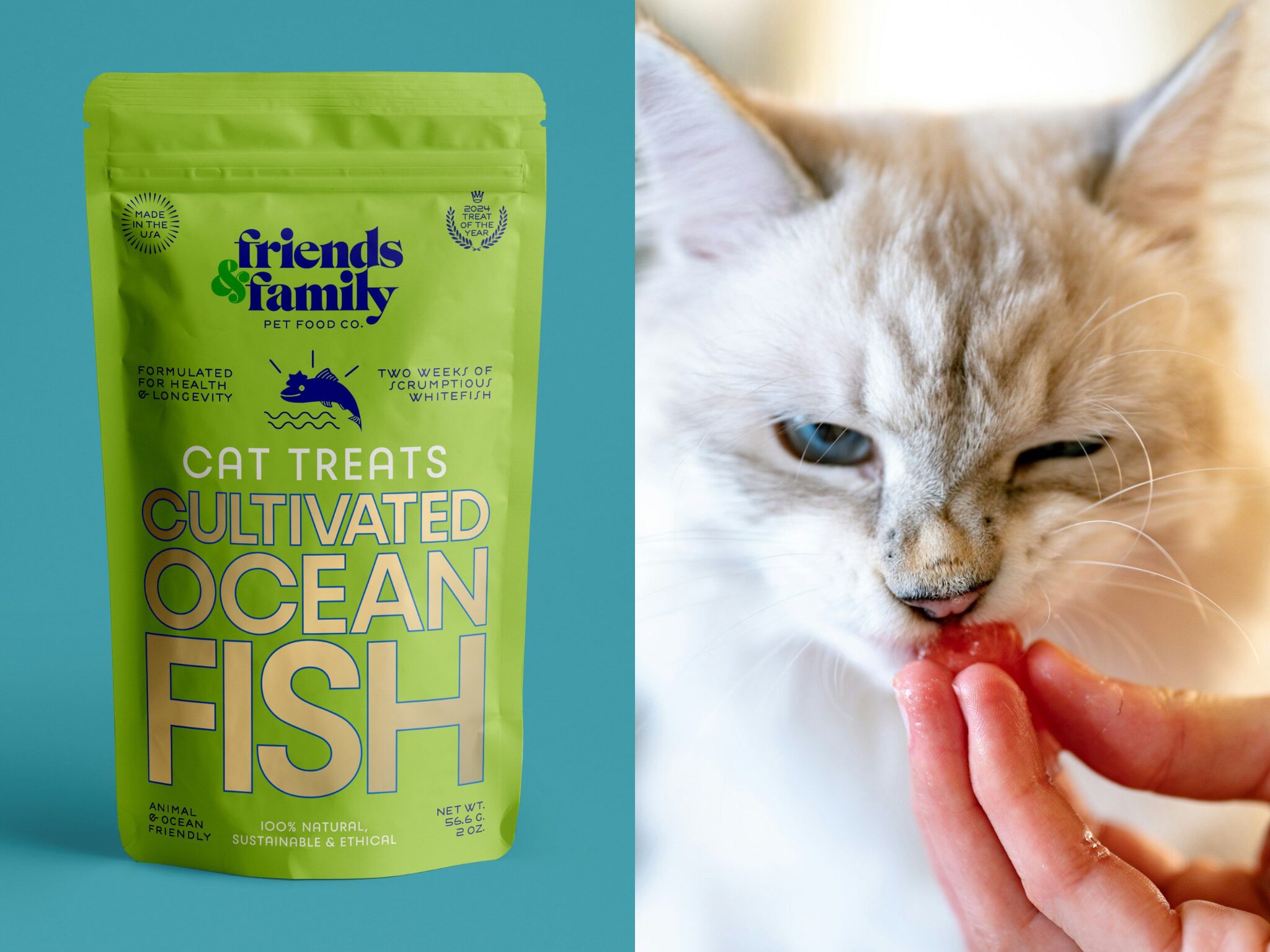
Cats are carnivores by necessity
Cats are obligate carnivores. This isn’t a dietary preference; it’s a biological necessity. They require nutrients found only in animal tissue, like taurine and arachidonic acid, for survival. This creates a unique challenge when considering sustainable pet food options because simply switching to plant-based diets isn’t viable for our feline friends.
The environmental impact of producing meat for cat food is substantial. Raising livestock requires vast amounts of land and water, contributes significantly to greenhouse gas emissions, and often leads to deforestation. A 2017 study published in Science found that meat production accounts for nearly 60% of global greenhouse gas emissions. Considering the sheer volume of pet food consumed globally, this impact is not insignificant.
Current reliance on fish-based ingredients also presents serious sustainability issues. Overfishing is depleting ocean populations, disrupting marine ecosystems, and threatening biodiversity. Many popular cat foods contain fishmeal and fish oil, contributing to this problem. Finding alternative protein sources that don’t rely on wild-caught fish is critical.
Cats also have sensitive digestive systems. Sudden changes in protein sources can lead to gastrointestinal upset, so any alternative protein – even lab-grown – must provide a complete and balanced nutritional profile. It needs to mimic the essential amino acids and nutrients cats obtain from traditional meat sources to avoid deficiencies or health problems.
How lab meat is actually made
The process of creating cultured meat begins with a small sample of cells, typically obtained through a painless biopsy from a healthy animal. These cells are then placed in a carefully controlled environment – a bioreactor – where they are provided with the nutrients they need to proliferate.
The growth medium is crucial. It’s a liquid containing amino acids, vitamins, minerals, and growth factors that support cell growth and division. Early growth mediums often relied on fetal bovine serum, which raised ethical concerns; however, companies are increasingly developing serum-free alternatives.
For some types of cultured meat, a scaffolding material is used to provide structure and support for the growing cells. This scaffolding can be made from plant-based materials or other biocompatible substances. The cells attach to the scaffold and grow, forming a three-dimensional tissue structure.
Is it truly "meat’? According to the USDA, the answer is yes. Their guidance on human food made with cultured animal cells (fsis.usda.gov) focuses on ensuring the product meets the definition of ‘meat" based on its cellular composition. This guidance is being adapted for pet food as well.
A common concern is whether cultured meat involves genetic modification. Currently, the process doesn't require genetic modification, though it’s a potential avenue for improving efficiency. And regarding growth hormones, cultured meat production doesn’t typically involve adding hormones – the cells are stimulated to grow through the nutrients in the growth medium.
2026 Projections: Market & Adoption
The cultured meat industry is still in its early stages, but it’s experiencing rapid growth. While widespread adoption is still several years away, projections for 2026 are optimistic. The biggest hurdles remain cost and scaling production. Currently, producing cultured meat is significantly more expensive than traditional meat production.
Several companies are leading the charge in cultured pet food. BioCraft Pet (biocraftpet.com) is one example, focusing on real meat for pets produced sustainably. Others, like Because, Inc., are also developing cultured meat options for both cats and dogs. Investment in this area is increasing, which will help drive down costs and improve scalability.
Projected price points for 2026 are difficult to predict with certainty, but industry analysts estimate that cultured cat food could initially be priced similarly to premium, grain-free options – perhaps around $4-6 per can. As production scales up, prices are expected to decrease.
Consumer acceptance is also a key factor. A recent survey by PETA found that a significant percentage of pet owners (around 60%) are open to feeding their pets cultured meat, citing ethical and environmental concerns. However, education and transparency will be crucial to address any remaining concerns about safety and quality.
- Factories need to scale up to bring the price down to grocery store levels.
- Regulators need to set clear safety rules for pet-specific cell lines.
- Companies have to prove to skeptical owners that lab meat is actually meat.
Comparative Analysis of Cat Food Production Methods
| Production Method | Environmental Impact | Nutritional Completeness | Cost | Scalability | Consumer Acceptance |
|---|---|---|---|---|---|
| Traditional (Animal Agriculture) | High – Significant land use, water consumption, greenhouse gas emissions. | Generally Complete – Established formulations, potential variability based on ingredient sourcing. | Moderate – Dependent on ingredient costs and supply chain. | Mature – Well-established infrastructure. | High – Familiar and widely accepted by cat owners. |
| Insect-Based | Moderate – Lower land and water use compared to traditional, but still requires resource input. | Potentially Complete – Requires careful formulation to meet feline taurine and other essential nutrient needs. | Moderate to High – Insect farming can be costly, impacting final product price. | Developing – Scalability is improving, but faces logistical challenges. | Moderate – Growing acceptance, but some consumer hesitation remains. |
| Lab-Grown (Cultured) | Low – Significantly reduced land use, water consumption, and greenhouse gas emissions. Potential for minimal waste. | Potentially Complete – Requires precise control of cell culture conditions and nutrient supplementation to ensure feline-specific nutritional requirements are met. | Currently High – Initial production costs are substantial, but expected to decrease with technological advancements. | Limited – Currently faces scalability challenges, requiring significant investment in bioreactor capacity. | Low to Moderate – Novel concept, requiring consumer education and overcoming potential ‘unnatural’ perceptions. |
| Traditional (Rendered Products) | Moderate to High – Relies on byproducts of animal agriculture, still carries environmental burdens of livestock farming. | Generally Complete – Often supplemented to meet AAFCO standards, quality can vary. | Low to Moderate – Utilizes less desirable parts of animals, generally cost-effective. | Mature – Established processing and distribution networks. | Moderate – Common ingredient, but consumer awareness of sourcing is growing. |
| Insect-Based (Black Soldier Fly Larvae) | Moderate – Efficient feed conversion, but requires controlled environments and specific feedstocks. | Potentially Complete – Rich in protein and fats, requires supplementation with essential amino acids and vitamins for complete feline nutrition. | Moderate – Production costs are decreasing, but remain higher than traditional sources. | Developing – Expanding production facilities, but still limited compared to traditional agriculture. | Moderate – Increasing acceptance, particularly among environmentally conscious consumers. |
Illustrative comparison based on the article research brief. Verify current pricing, limits, and product details in the official docs before relying on it.
What the science says about health
One of the most exciting potential benefits of lab-grown cat food is the ability to tailor the nutritional profile to meet specific dietary needs. For cats with kidney disease, for example, it may be possible to create a food with precisely controlled levels of phosphorus and protein. Similarly, for cats with allergies, cultured meat could be produced without common allergens.
Controlling the nutritional profile is easier with cultured meat. Traditional meat can vary in its composition depending on the animal's diet and genetics. Cultured meat allows for precise control over the levels of essential nutrients, ensuring a complete and balanced diet for cats.
Cultured meat also has the potential to reduce the risk of foodborne illnesses. The controlled environment of a bioreactor minimizes the risk of contamination with bacteria like Salmonella and E. coli. However, it’s important to note that rigorous safety testing is still required.
Allergy concerns aren’t completely eliminated. Even though cultured meat is produced from cells, cats can still have sensitivities to specific proteins. Careful monitoring and ingredient transparency will be essential. Long-term studies are still needed to fully understand the health effects of cultured meat on cats.
Ethical and Environmental Impacts
The ethical benefits of cultured meat are significant. It drastically reduces animal suffering by eliminating the need to raise and slaughter animals for food. While a small initial cell sample is required, this is a one-time procedure and doesn't involve ongoing animal exploitation.
From an environmental perspective, cultured meat has the potential to significantly reduce the environmental footprint of pet food production. It requires less land, water, and energy than traditional livestock farming. It also reduces greenhouse gas emissions and minimizes pollution.
Localized production is another key advantage. Cultured meat facilities can be located closer to consumers, reducing transportation emissions and creating local jobs. This also enhances supply chain resilience.
PETA (peta.org) strongly supports the development of cultivated meat, viewing it as a crucial step towards a more compassionate and sustainable food system. They argue that it addresses both animal welfare and environmental concerns.
Expert Perspectives on Cultured Pet Food Potential (Late 2023/Early 2024)
| Source | Date | Key Argument/Data Point | Focus Area |
|---|---|---|---|
| PETA | November 2, 2023 | Cultivated meat eliminates the need for factory farming, addressing animal welfare concerns associated with traditional meat production for pet food. | Animal Welfare & Ethics |
| FSIS (USDA) | November 9, 2023 | The USDA’s Food Safety and Inspection Service (FSIS) is engaged with companies producing food made with cultured animal cells, establishing a regulatory framework. | Regulation & Food Safety |
| PETA | December 15, 2023 | Traditional animal agriculture is a significant contributor to greenhouse gas emissions; cultivated meat offers a pathway to substantially reduce this environmental impact. | Environmental Sustainability |
| FSIS (USDA) | December 20, 2023 | FSIS is working to ensure that human food products made with cultured animal cells are safe, wholesome, and truthfully labeled. | Food Safety & Labeling |
| PETA | January 5, 2024 | Cultivated meat can be tailored to provide optimal nutrition for pets, potentially addressing specific dietary needs and health concerns. | Nutritional Benefits |
| FSIS (USDA) | January 12, 2024 | The FSIS has been actively engaging with multiple companies involved in the production of cultivated meat, including those aiming to serve the pet food market. | Industry Engagement |
Illustrative comparison based on the article research brief. Verify current pricing, limits, and product details in the official docs before relying on it.
No comments yet. Be the first to share your thoughts!